Your plan · sample household
Your preparation plan
For a The Fence-Line Optimist household — The bush is basically their back fence, and the whole plan is that it stays friendly.
Finish Stage 1 and this household becomes a The Calm Bush Neighbour. Back to the report
Progress is saved in this browser. Register from your report and your household is saved to your account.
Readiness — Stage 1
The kit and decisions that carry your household through the first three days.
Write your household emergency plan
Decide together: when you would leave and when you would stay, where you would go, a meeting point if separated, and how you will follow official warnings.
Most harm in a bushfire event comes from decisions made under pressure — a short written plan means your household already knows when to leave, where to go, and what to follow.
Notes and official sources
Warning channels are state-specific: Fires Near Me (NSW), VicEmergency (VIC), the state disaster dashboard plus local ABC radio (QLD). NSW households are pointed to the RFS Bush Fire Survival Plan (myfireplan.com.au). Include where the water, power and gas mains are and how to turn them off (Queensland guidance).
Store drinking water for three days
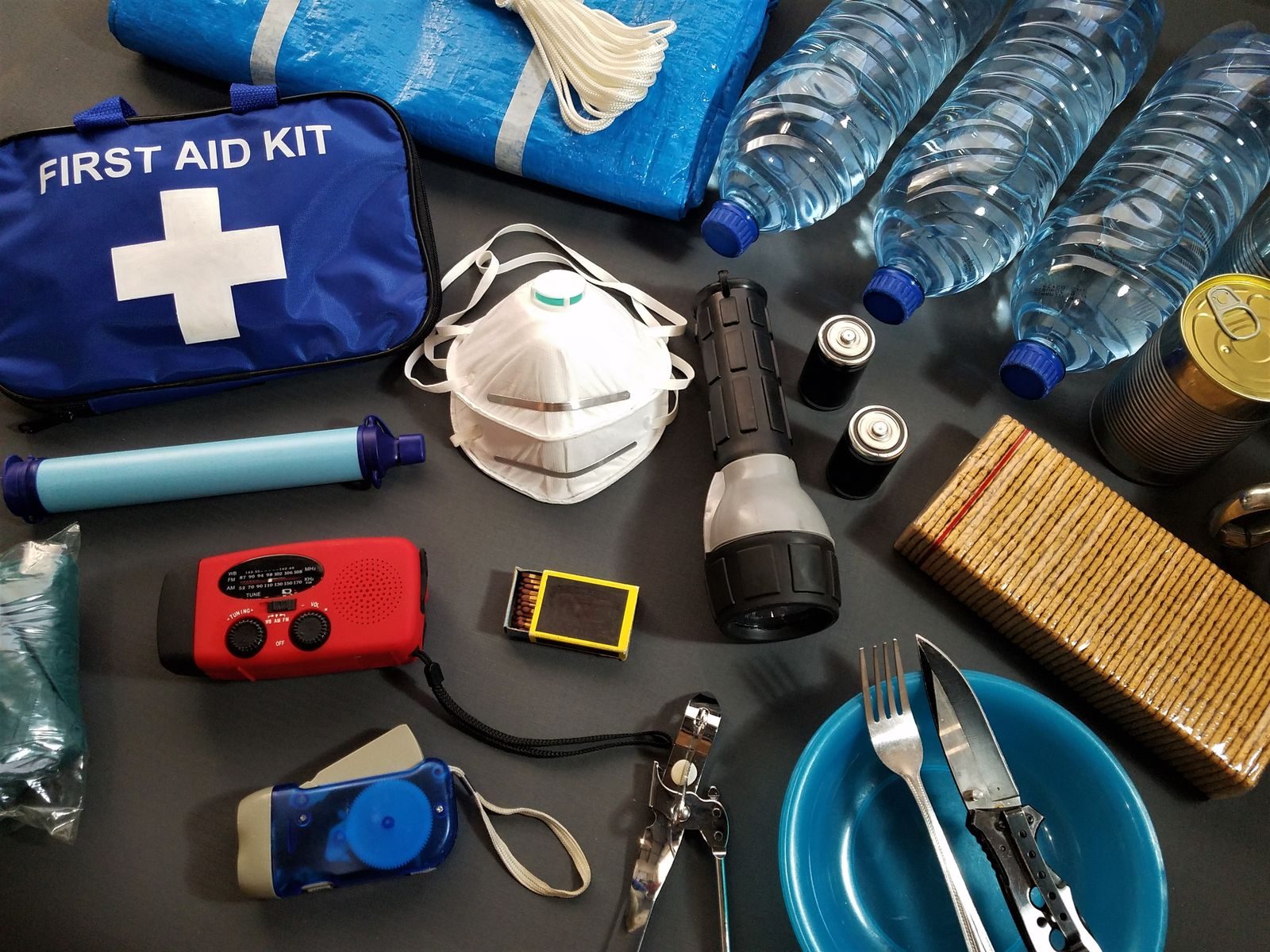
Store at least 10 litres of drinking water per person — enough for three days if taps stop or water is unsafe.
If bushfire interrupts your water supply, this gives everyone at home three days of drinking water without depending on shops or working taps.
Notes and official sources
Uses the Australian figure of 10 L per person for 3 days (~3.3 L/person/day), not the US FEMA gallon rule. Self-filled water should be refreshed about every 3 months (Urban Utilities). Pet water is additional — see AU-S1-07.
Pack a first aid kit and your regular medications
A household first aid kit, plus at least three days of each person's regular prescription medication kept with the kit, and spare glasses if you wear them.
If bushfire closes roads or pharmacies for a few days, having your regular medication and a first aid kit at home covers the gap without a trip out.
Notes and official sources
Scope is limited to keeping regular prescription medication and a copy of prescriptions on hand — no medication advice of any kind. Three days here; the two-week buffer is AU-S2-02 (Red Cross wording).
Set up light and emergency information
A torch for each person, spare batteries, a battery or wind-up radio set to your local ABC frequency, and a charged power bank for phones.
When the power and mobile networks go down during bushfire, a torch and a battery radio are how your household still gets light and official warnings.
Notes and official sources
Australian guidance consistently names a battery/wind-up radio tuned to the local ABC frequency as a primary warning channel. Buy electrical items with Australian plugs and the RCM compliance mark only.
Secure your documents and emergency cash
Copy your ID, insurance, Medicare and property documents to a USB and cloud storage, keep a printed set in a waterproof pouch, and hold spare cash in small notes.
If you have to leave home quickly because of bushfire, having your documents and cash ready means proving who you are and paying for essentials never depends on going back.
Notes and official sources
The Queensland list asks for important documents 'on USB or online' (licences, passports, birth certificates, Medicare cards, insurance policies) and spare cash in case ATMs or the internet are not working. Red Cross treats document copies as a separate recovery kit, ideally with one copy stored away from home.
Stock three days of no-cook food
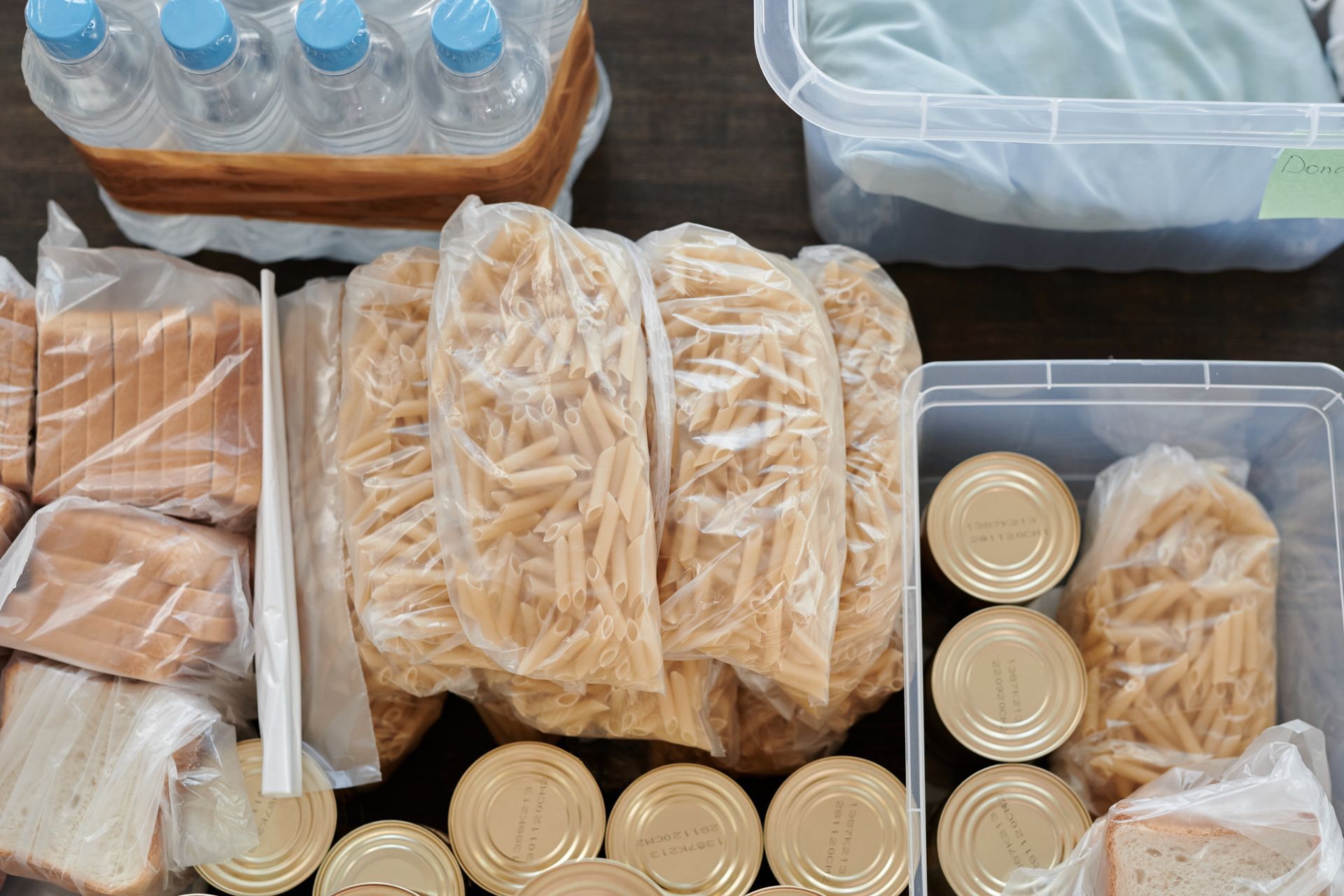
Keep three days of long-life food your household actually eats, plus a manual can opener — nothing that needs refrigeration or cooking.
With power out and shops closed or unreachable, three days of ready-to-eat food means bushfire doesn't turn into a food problem on day one.
Notes and official sources
Queensland's official list specifies packet, canned and dried food for three days. A manual can opener is listed separately by both QLD SES and Red Cross — electric openers are useless in an outage. Add formula/baby food prompts for households with infants.
Deepening the same buffer towards a week — the level Australian guidance points to. Steps beyond seven days — towards two weeks — are an optional advanced level: a withHarmora recommendation, not an official guideline, and the steps say so where it applies.
This stage's steps for your household:
- Prepare your property for bushfire season
- Extend food and water towards two weeks
- Set up backup power and an outage routine
- Make a heatwave plan for your home
- Stock two weeks of hygiene and sanitation basics
- Put your kit on a seasonal check cycle
Checking your account…
Seasonal checks and upkeep, timed to the risks your place actually carries.
The asset protection zone, drawn
In NSW, the 10/50 vegetation clearing code lets a home in a mapped area clear trees within 10 metres of the house and vegetation within 50 metres without a separate approval — one of this stage's core moves. Every state's rule differs; your full report carries your state's own table, from its own fire service.
SOURCE: NSW RURAL FIRE SERVICE — 10/50 VEGETATION CLEARING CODE OF PRACTICE. DIAGRAM IS SCHEMATIC, NOT TO SCALE.
This stage's steps for your household:
- Write your bush fire survival plan
- Create and maintain an asset protection zone
- Ember-proof your home
- Storm-proof your home
Checking your account…
The capabilities that outlast any single event — first aid, growing, mending, knowing your neighbours.
The skills this stage builds
Stage 4 is not purchases — it is capability, the part of readiness no delivery can bring. These are this household's Stage 4 lines:
COURSES AND STANDARDS NAMED IN EACH STEP ARE THE OFFICIAL ONES — ST JOHN AMBULANCE, AUSTRALIAN RED CROSS, FSANZ — WITH SOURCES ON EVERY STEP ABOVE.
This stage's steps for your household:
- Build a neighbourhood check-in network
- Learn your home's shut-offs and keep a basic tool kit
- Complete an accredited first aid course
- Learn to preserve food safely
- Start a kitchen garden
- Run a household emergency drill
Checking your account…
Shopping list
Shopping list
Everything your action plan asks you to buy, in one place — grouped by store so you can buy it in as few trips as possible. Back to my report
Bunnings · 4 items
For: Write the blackout cold-chain plan.
Find it at Bunnings ↗affiliate link
For: the no-power information plan.
Find it at Bunnings ↗affiliate link
Woolworths · 2 items
For: the two-week pantry reserve.
Find it at Woolworths ↗affiliate link
For: the household sanitation reserve.
Find it at Woolworths ↗affiliate link
Chemist Warehouse · 1 item
For: Pack the bag to your household list.
Find it at Chemist Warehouse ↗affiliate link
Officeworks · 1 item
For: the grab-and-go documents set.
Find it at Officeworks ↗affiliate link
Kmart · 1 item
For: Confirm the weekday lift — the bag lives by the door.
Find it at Kmart ↗affiliate link
Links marked “Find it” are affiliate links: if you buy through one, withHarmora may earn a commission at no extra cost to you. Commissions never change which steps we recommend or the order they appear in — that order is set only by your household's risks and gaps. Full disclosure in our terms
Prices aren't listed here — the retailer's search page shows live prices. Buttons link to retailer search pages, never to a fabricated product page.